-
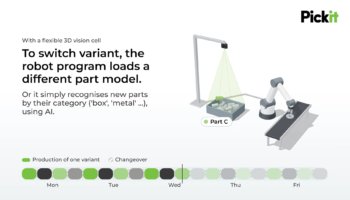
Too many variants to automate? How to handle high mix, low volume.
Traditional robot cells rely on fixed positions and predictable parts. Every new variant can mean new fixtures, reprogramming and costly changeovers. With 3D robot vision, you can handle more variants with minimal setup and great flexibility. AI-powered detection even allows you to recognise new parts by category, using a simple prompt like “box” or “metal” instead of configuring each variant individually.
Read more -
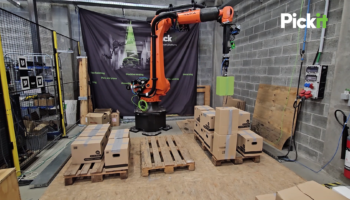
How do you automate mixed-box depalletization?
Mixed pallets bring different box sizes, stacking patterns and SKUs with every delivery.
Read more
In this video, a robot depalletizes a mixed pallet, one box at a time. Pickit 3D vision detects each box and guides the robot to its next pick. -
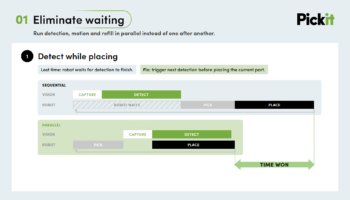
Where does your robot lose time?
Most of the lost seconds in a 3D vision-guided pick-and-place cycle come from waiting and unnecessary motion. We show how to fix this, with 8 practical tips you can apply to improve the cycle time of an existing cell.
Read more -
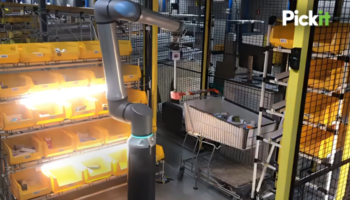
Teaching a vision system every new box? There’s another way.
In distribution, many different SKUs come through in boxes or pieces of different sizes, shapes and colors and changes happen often. For model-based 3D vision, that's a configuration challenge.📦
Read more -

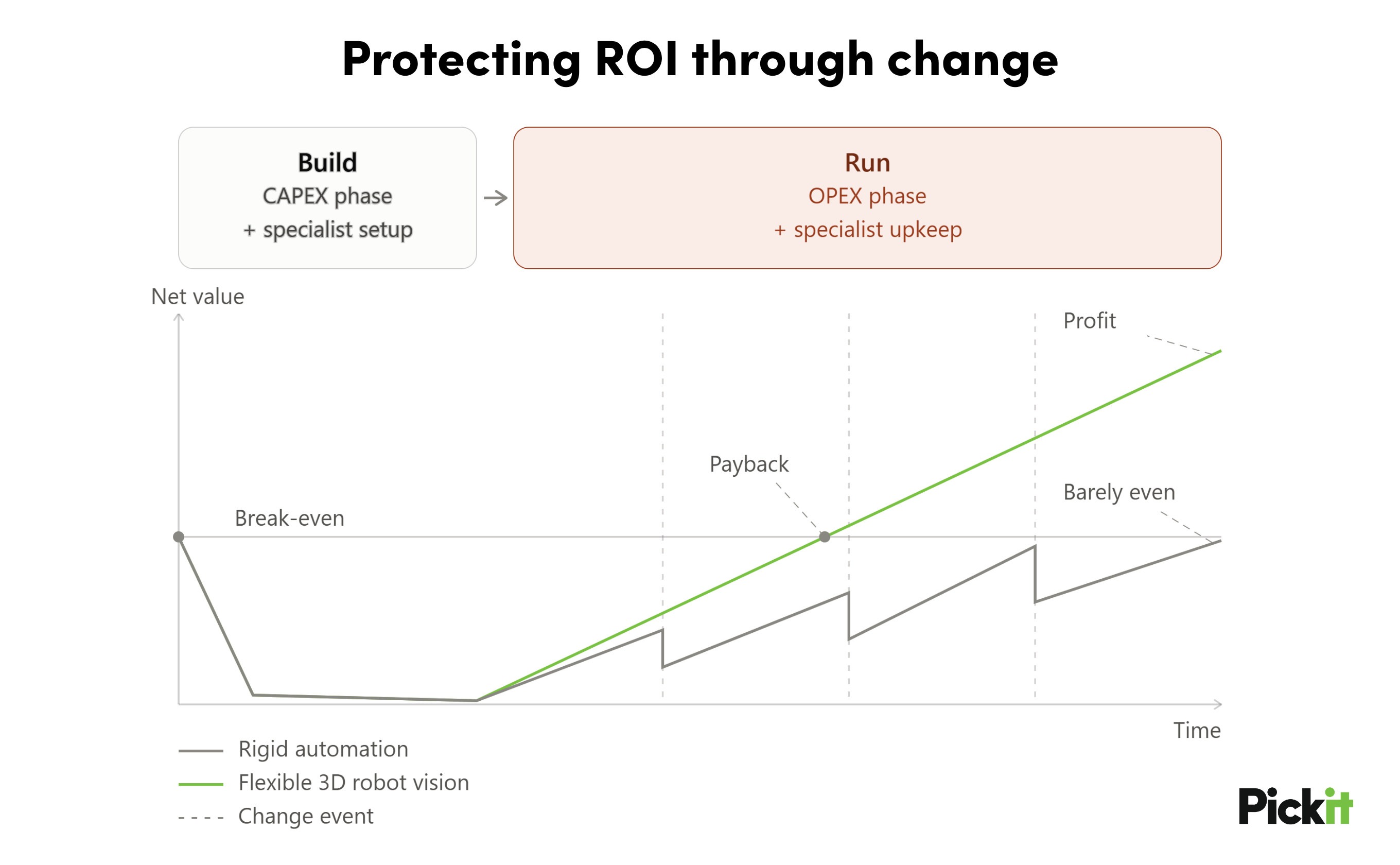
Rigid Automation vs 3D Robot Vision: Which Pays Back Faster?
Two different types of automation: rigid and 3D robot vision. Similar investments. Very different return. Once the cells are running, both start earning back their cost. Then something changes: a new part, a new variant, a revised layout. For the rigid cell, each change means new costs in fixtures, reprogramming and downtime.
Read more
The cell with 3D robot vision handles the same change seamlessly as it can easily adapt. So it keeps moving toward payback. 📈 -
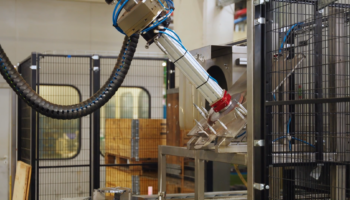
From manual handling to flexible automation at Picanol Group
Heavy gear handling. High product mix. Reflective metal parts. These were some of the challenges Picanol Group, an industrial manufacturing company, set out to solve through 3D robot automation.
Read more
Together with Proferro, Picanol Weaving Machines deployed Pickit 3D vision across three robotic workstations to automate the handling of heavy, reflective gear components. -
 Read more
More choice, same Pickit. Two active-stereo cameras join the HD family
Selecting the right 3D camera starts with the application: the required accuracy, field of view and mounting setup are never the same. That is why Pickit is expanding its HD 3D vision camera range with two active-stereo cameras.
-
 Read more
Automation's biggest cost is the cost of change
Your automation ROI isn’t won or lost on the first invoice. It’s often eroded by every change that follows. New part variants, revised layouts and changing process requirements can trigger extra engineering, new fixtures, revalidation and downtime. 3D robot vision helps cells adapt without rebuilding the process around every change, protecting the business case throughout the cell’s lifetime.
-
 Read more
Automotive on autopilot. 6 automotive cases powered by 3D Vision
Traditional automation depends on fixed positions, dedicated fixtures and predictable parts. 3D vision enables robots to locate components, compensate for deviations and perform complex production tasks even when picks or parts are different.