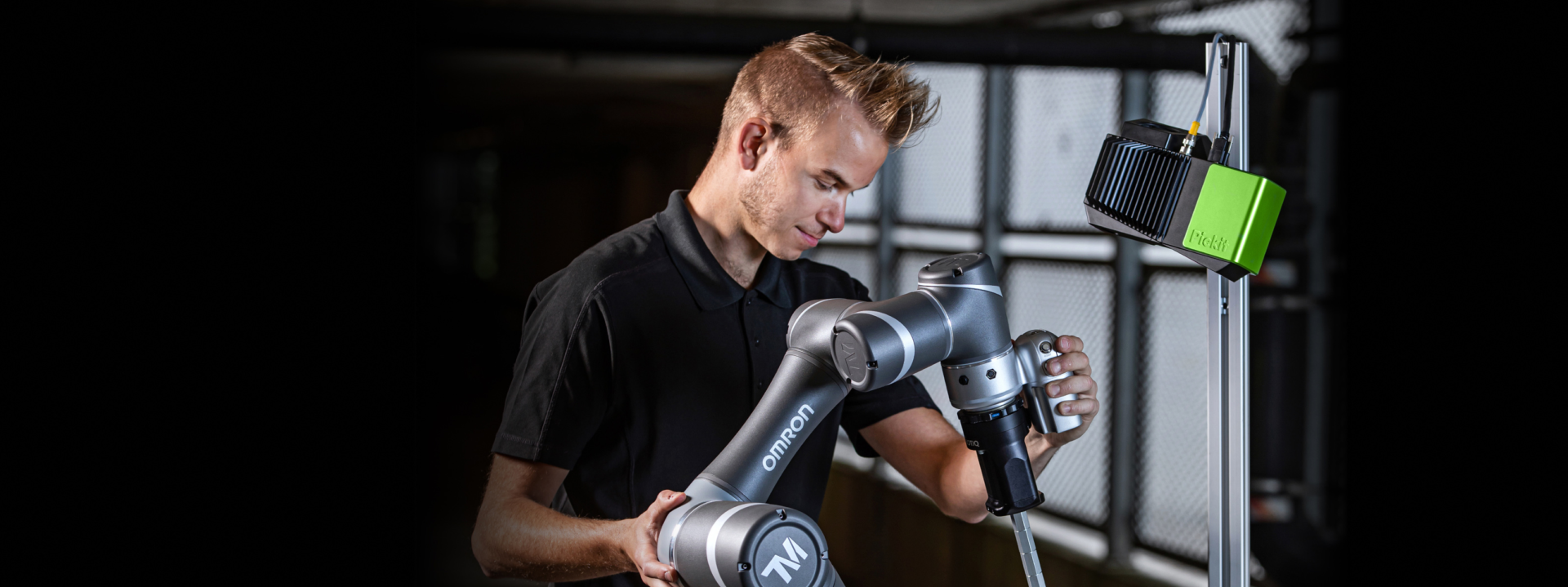
How 3D Robot vision is transforming automotive quality control
In today’s highly competitive automotive industry, quality consistency and production performance are essential for OEMs. Hence, quality control is undergoing a fundamental shift. As vehicles become more complex and production requirements more demanding, traditional off-line sample-based inspection methods are no longer enough. In-line measurement powered by 3D robot vision is emerging as a critical enabler bringing real-time, data-driven quality control directly into production processes.
Why quality demands are increasing
Several trends are raising the bar for quality in automotive manufacturing. Electrification and large-platform expansion are increasing the need for dimensional stability. At the same time, growing product complexity, with more parts, mixed materials, and tighter tolerances, is exposing the limits of conventional sampling-based inspection. In parallel, stricter global standards are pushing manufacturers toward full traceability and data-driven quality assurance. In this context, quality has become a decisive factor in securing and maintaining business.
In-line measurement powered by 3D robot vision

3D robot vision fundamentally changes this paradigm by shifting quality control from a reactive, downstream activity to a proactive, in-line process. Using laser-based 3D robot vision, manufacturers can deploy a 3D vision-powered in-line measurement system that performs real-time inspection of body parts and assemblies. Such a system can measure critical dimensions by detecting key features, including nut holes, inner hole, edges, surfaces and more, and integrate them into the vehicle coordinate system for unified output and management. This enables high-precision dimensional and GD&T inspection directly in-line. This solution addresses quality needs for OEMs and manufacturers across the production chain, from body shop to final assembly.
The key advantages of 3D vision in-line measurement are:
Faster root-cause detection: Full inspection data for every part helps identify quality issues earlier, reducing rework, scrap, and downstream production problems.
Less downtime and faster ramp-up: Real-time in-line feedback allows immediate process adjustments, helping prevent production interruptions and speed up new model launches.
Lower quality costs: Connected VIN-level quality data improves traceability and supports proactive quality control instead of reactive troubleshooting.
How it works
A typical in-line 3D robot vision measurement setup combines:
An industrial robot
Robot-mounted 3D vision camera
3D robot vision software
Measurement and analysis software
Integration with MES and quality systems
Together, these components enable continuous measurement, analysis, and feedback fully embedded within production. Our integrated and easy-to-set up 3D robot vision solution helps reduce deployment complexity and accelerate commissioning of in-line measurement across production lines.
High-resolution 3D vision for accurate quality inspection

Inspection requires precision. With the XS-HD2, Pickit offers a camera specifically engineered for high-accuracy inspection applications. This high-resolution camera delivers the level of detail required to detect small geometric deviations and inspect complex features, even on reflective or low-contrast parts. Combined with industrial robustness, it can perform accurate measurements directly in production conditions without sacrificing speed.
Dedicated hole detection engine

Equally important is the software layer. Pickit’s powerful and easy-to-use platform is equipped with a dedicated hole detection engine designed to accurately detect internal geometries such as threaded or recessed holes, without programming. Unlike generic detection methods, this specialized engine ensures reliable performance and consistent, repeatable measurements where precision matters most. Pickit’s detection algorithms allow to detect consistently even partially occluded holes, while not being affected by light conditions.
Key differentiators
Pickit’s 3D measurement solution ensures precision and long-term reliability thanks to:
Calibration & localization: The system aligns robot, process and vision to the vehicle coordinate system, and enables absolute point-to-point distance calculation.
Multi-feature measurement: It can measure various shapes, including spheres, circles, slots, rectangles, edges, surfaces, nut holes, and inner holes.
Auto-calibration: To maintain reliability, the system automatically compensates for changes in production conditions and temperature.
Customization support: An API is provided for tailored integration with existing customer MES, quality systems, and reporting.
Turning data into decisions

3D vision in-line measurement turns raw data into actionable insight by linking measurements to production context, enabling real-time trend analysis and fast validation of process improvements. This allows manufacturers to move from reactive quality control to continuous, data-driven predictive optimization.
In-line 3D vision measurement typically delivers ROI within eight to eighteen months by reducing rework, improving inspection efficiency, and accelerating quality stabilization. At the same time, full-data traceability strengthens audit readiness and long-term competitiveness.
As automotive manufacturing continues to evolve, the shift toward in-line, real-time quality control will accelerate. 3D robot vision is not just improving inspection. It is redefining it. By embedding measurement directly into production, manufacturers gain the speed, precision, and insight needed to meet increasingly stringent quality demands.