-
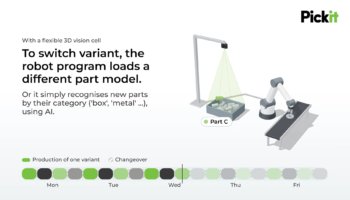
Too many variants to automate? How to handle high mix, low volume.
Traditional robot cells rely on fixed positions and predictable parts. Every new variant can mean new fixtures, reprogramming and costly changeovers. With 3D robot vision, you can handle more variants with minimal setup and great flexibility. AI-powered detection even allows you to recognise new parts by category, using a simple prompt like “box” or “metal” instead of configuring each variant individually.
Weiterlesen -
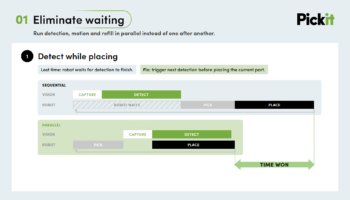
Where does your robot lose time?
Most of the lost seconds in a 3D vision-guided pick-and-place cycle come from waiting and unnecessary motion. We show how to fix this, with 8 practical tips you can apply to improve the cycle time of an existing cell.
Weiterlesen -
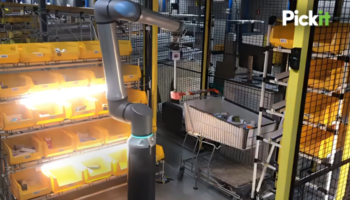
Teaching a vision system every new box? There’s another way.
In distribution, many different SKUs come through in boxes or pieces of different sizes, shapes and colors and changes happen often. For model-based 3D vision, that's a configuration challenge.📦
Weiterlesen -

Rigid Automation vs 3D Robot Vision: Which Pays Back Faster?
Two different types of automation: rigid and 3D robot vision. Similar investments. Very different return. Once the cells are running, both start earning back their cost. Then something changes: a new part, a new variant, a revised layout. For the rigid cell, each change means new costs in fixtures, reprogramming and downtime.The cell with 3D robot vision handles the same change seamlessly as it can easily adapt. So it keeps moving toward payback. 📈
Weiterlesen -
-
 Weiterlesen
More choice, same Pickit. Two active-stereo cameras join the HD family
Selecting the right 3D camera starts with the application: the required accuracy, field of view and mounting setup are never the same. That is why Pickit is expanding its HD 3D vision camera range with two active-stereo cameras.
-
 Weiterlesen
Automotive on autopilot. 6 automotive cases powered by 3D Vision
Traditional automation depends on fixed positions, dedicated fixtures and predictable parts. 3D vision enables robots to locate components, compensate for deviations and perform complex production tasks even when picks or parts are different.
-
 Weiterlesen
The top 10 questions manufacturers ask
Thinking about using 3D robot vision in your operations, but not sure if it’s the right move? You’re not alone. Manufacturers come to us with very no-nonsense inquiries about feasibility, ROI, flexibility, integration, and impact on people and processes. So let’s tackle the 10 most common questions we hear, based on real conversations from the factory floor.
-

From manual loading to fully automated laser marking - powered by 3D robot vision.
When manual loading limits consistency and precision, automation becomes more than an upgrade.We contributed to a fully integrated Automated Laser Marking System, developed by GASBARRE, that combines precision, efficiency, and flexibility in one seamless workflow.
Weiterlesen