-

Rigid Automation vs 3D Robot Vision: Which Pays Back Faster?
Two different types of automation: rigid and 3D robot vision. Similar investments. Very different return. Once the cells are running, both start earning back their cost. Then something changes: a new part, a new variant, a revised layout. For the rigid cell, each change means new costs in fixtures, reprogramming and downtime.The cell with 3D robot vision handles the same change seamlessly as it can easily adapt. So it keeps moving toward payback. 📈
더 읽어보기 -
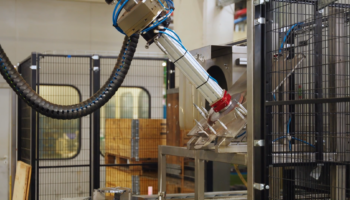
From manual handling to flexible automation at Picanol Group
Heavy gear handling. High product mix. Reflective metal parts. These were some of the challenges Picanol Group, an industrial manufacturing company, set out to solve through 3D robot automation.Together with Proferro, Picanol Weaving Machines deployed Pickit 3D vision across three robotic workstations to automate the handling of heavy, reflective gear components.
더 읽어보기 -
 더 읽어보기
More choice, same Pickit. Two active-stereo cameras join the HD family
Selecting the right 3D camera starts with the application: the required accuracy, field of view and mounting setup are never the same. That is why Pickit is expanding its HD 3D vision camera range with two active-stereo cameras.
-
 더 읽어보기
Automotive on autopilot. 6 automotive cases powered by 3D Vision
Traditional automation depends on fixed positions, dedicated fixtures and predictable parts. 3D vision enables robots to locate components, compensate for deviations and perform complex production tasks even when picks or parts are different.
-
 더 읽어보기
The top 10 questions manufacturers ask
Thinking about using 3D robot vision in your operations, but not sure if it’s the right move? You’re not alone. Manufacturers come to us with very no-nonsense inquiries about feasibility, ROI, flexibility, integration, and impact on people and processes. So let’s tackle the 10 most common questions we hear, based on real conversations from the factory floor.
-
 더 읽어보기
5 ways 3D robot vision is transforming automotive manufacturing
By gives robots “eyes,” 3D robot vision is enabling smarter, more flexible automation that tackles today’s challenges, and is reshaping automotive manufacturing.
-
 더 읽어보기
Why traditional automation falls short in automotive
The automotive industry demands flexibility, speed and precision. Yet traditional automation struggles to keep up with evolving models, customization, and market pressure. Here’s where the biggest pain points lie.
-
 더 읽어보기
Busting 6 myths about 3D robot vision
3D robot vision is too expensive….requires complex coding…is not for industrial use…With any technology, there are bound to be a few misconceptions floating around. Ready to separate fact from fiction? Let’s debunk some myths…
-
 더 읽어보기
5 biggest challenges in setting up 3D robot vision automation
Implementing 3D robot vision successfully can present a few unique challenges. Knowing the capabilities of the equipment, getting the team on board, and ensuring the system works reliably in the real world all play a crucial role. Addressing these challenges effectively is key to getting the most out of this powerful technology. We break them down for you...